


Read on to learn the best tips for how to make a salad at home that tastes like it’s from a fancy restaurant. 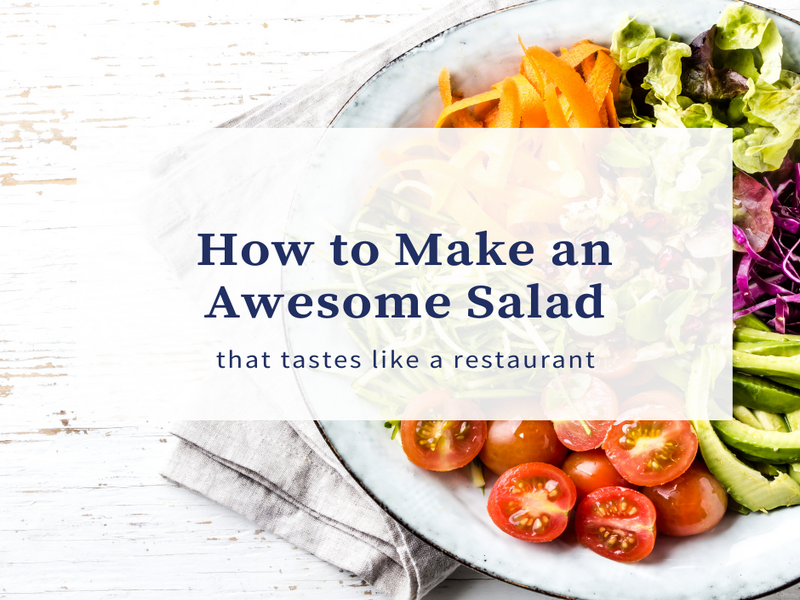
How to Make a Salad That Actually Tastes Good
For a long time I was spending $12 on salads at my favorite restaurant and then going home to a bag of wilting lettuce I had no interest in eating. The restaurant salad felt exciting. My homemade version felt like a punishment.
I spent a long time trying to figure out why. Once I did, everything changed.
The answer isn't complicated. Restaurant salads have a lot of components. They're built, not just assembled. There's something crunchy, something creamy, something sweet, something fresh. Every bite has contrast.
A bowl of romaine with bottled dressing has none of that, which is why it's forgettable no matter how healthy it technically is.
If you want a salad you actually look forward to eating, you have to build it the same way.
Here's the exact guide to do that.
Why This Matters
Before we get into the steps.... if you're trying to eat more vegetables, feel better, maintain your weight, or just get more nutrients into your day, learning to make a genuinely good salad is one of the highest-return skills you can develop.
A well-built salad can be a complete, satisfying meal that keeps you full for hours. A bad one makes you reach for crackers 20 minutes later.
The Mediterranean diet is built around vegetables, and salads are one of the easiest ways to get a wide variety of them into one meal.
The more colors and ingredients, the more vitamins, minerals, and antioxidants you're getting. It adds up fast.
Six Steps to a Salad Worth Eating
Step 1: Start with more than one green
Lettuce is the foundation, but one type of lettuce is boring. Mix at least two: kale and romaine, spinach and arugula, whatever you have.
Different greens bring different flavors and nutrients, and the variety makes the whole bowl more interesting. Kale in particular is worth using regularly. It's one of the most nutrient-dense vegetables you can eat and it holds up well under dressing without getting soggy.
Step 2: Add more vegetables
Whatever vegetables you have on hand belong in a salad: fresh, roasted, grilled, or even leftover from last night's dinner. Fresh broccoli, beets, corn, roasted zucchini, pickled onions. It all works!
Grilled or roasted vegetables add a depth of flavor that raw vegetables alone can't match. Don't overthink it; just throw it in.
Step 3: Add something sweet, salty, or herby
This is the step most people skip and it's the one that makes a big difference.
Think about what your salad is missing. Does it need a little sweetness from fresh or dried fruit, saltiness from feta or olives, or brightness from fresh herbs like basil, mint, or cilantro?
Grilled peach on a salad sounds odd until you try it. Pomegranate seeds on kale sounds like a health food experiment until you make our Kale Pomegranate Salad and realize it's one of the best things you've eaten all week.
Step 4: Add crunch and texture
Seeds, nuts, croutons, crispy chickpeas... something needs to give your salad a little resistance. This is also where grains like quinoa or farro come in. They add a satisfying chewiness and staying power that keeps you full much longer than leaves alone.
Step 5: Add protein
This is what turns a salad from a side dish into a meal.
Grilled chicken, salmon, hard-boiled eggs, chickpeas, white beans, lentils, etc. If you added quinoa in step four, you're already getting some protein.
But for a salad that holds you over until dinner, aim for a dedicated protein source in every bowl.
Step 6: Dress it properly
A good salad doesn't need a complicated dressing. A drizzle of quality olive oil, a squeeze of lemon or a splash of vinegar, salt and pepper: that's all you need.
If you want something more substantial, make a simple lemon garlic dressing (recipe here) or balsamic vinaigrette (recipe here) at the start of the week and keep it in the fridge. Two dressings on rotation means you always have something good ready to go.
One important note: dress your salad right before eating, not ahead of time, so it doesn't get soggy. And use less dressing than you think you need. You can always add more, but you can't take it away.
Three Salads Worth Making This Week
If you want to put these steps into practice right now, here are three of our favorites:
- Kale Pomegranate Salad — sweet, crunchy, creamy, and genuinely impressive
- Crispy Roasted Kale — not a traditional salad but a great way to eat more kale with almost no effort
- Citrus Beet Salad — earthy, bright, and beautiful on a plate
The Bottom Line
A good salad isn't about restriction or eating something you don't enjoy. It's about building something worth eating with enough variety, texture, and flavor that you'd actually choose it over other options. Once you get the hang of it, you'll stop spending $12 at the salad shop and start wondering why you ever did.
If you want more ideas like this delivered straight to your inbox, join our email list here.


this salad is very refreshing thank you for telling me how to make it
Leave a comment